Edited by Jennifer Bryant · Poultry breeder, Animal Science graduate, and Poultry Nerds Podcast co-host.
Keep new chickens separate for at least 30 days, let both groups see each other through a fence until they're calm, and then mix them slowly. A little squabbling is normal. Patience is the secret ingredient.
Chickens take the pecking order very seriously. Every flock has a boss, a second-in-command, and so on down the line. New birds shake things up, so everyone needs time to sort it out.
Step 1: Quarantine First
New birds can carry germs or bugs that your flock has never met. Keep them in a separate pen, well away from your birds, for at least 30 days. Use separate feeders, waterers, and dedicated boots, and wash your hands between groups.
Watch for signs of illness during quarantine, although some infections can be carried without obvious symptoms.
Step 2: Look, Don't Touch
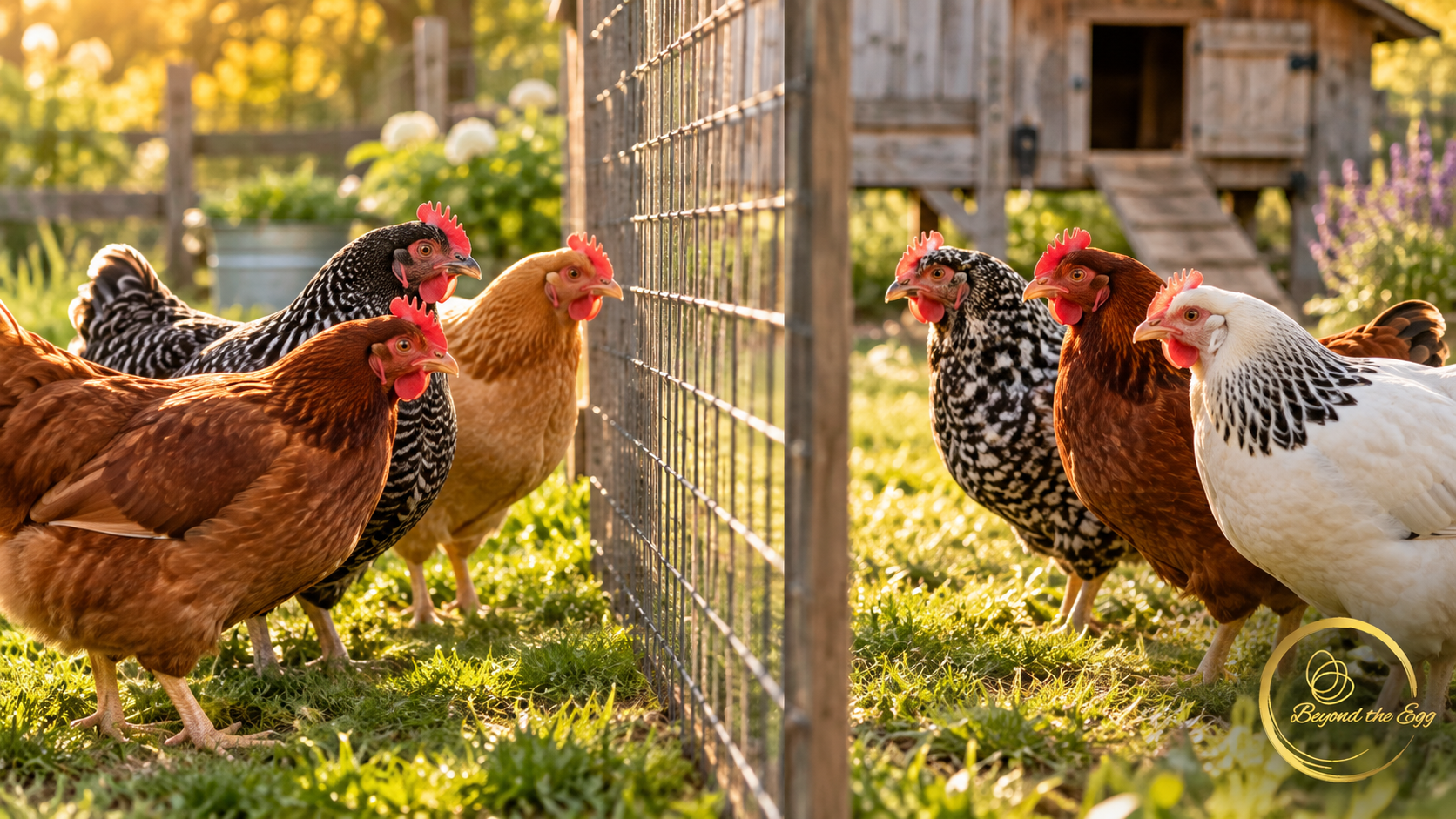
After quarantine, if the birds remain healthy, put the newcomers in a pen next to the flock. A secure wire divider keeps them apart. Now everyone can stare, chatter, and get curious before sharing space.
Step 3: Mix Them Slowly
When things look calm, let them mingle in the run while you can stay and supervise. Some keepers introduce birds at night, but that doesn't prevent fights when morning comes. Be there to watch and separate birds if needed.
Make It Easier on Everyone
Add extra feeders and waterers so nobody gets bullied away from food.
Toss some scratch or hang a cabbage to keep beaks busy.
Give them hiding spots, like a securely fixed panel with room to get away at either end.
Add at least two or three new birds at once. A lone newbie gets picked on most.
Match sizes. Small chicks shouldn't join big hens until they're nearly grown.
When to Step In
A little pecking and chasing can happen as the flock settles. But if a bird is bleeding, cornered, or can't eat or drink, separate her promptly. Blood can encourage more pecking; let injuries heal and get veterinary help when needed before trying again.
Ready to grow your flock? Find breeders and hatching eggs at Hatching Egg Directory.