What Attacks Chickens at Night? Meet the 7 Usual Suspects
Edited by Jennifer Bryant · Poultry breeder, Animal Science graduate, and Poultry Nerds Podcast co-host.
Raccoons, foxes, coyotes, owls, weasels, opossums, and skunks are the main chicken predators that come out after dark. The good news? One simple habit helps protect against them: lock your chickens inside a sturdy coop every single night.
Chickens are easy targets after sunset. They can't see well in the dark, and once they settle on the roost, they mostly just sit tight. That makes the coop their castle, so it pays to build a good one.
Meet the Night Raiders
Raccoons are the burglars of the backyard. Their nimble little hands can open simple latches and reach right through wire. If a bird was grabbed through a fence, a raccoon is one possibility, though clues alone cannot identify the predator for certain.
Foxes are quick and sneaky. They usually carry a chicken away, so you may find nothing but a few feathers. They dig under walls, too.
Coyotes work the same way, only bigger. A missing bird and a fresh hole under the fence can be clues to a digging predator.
Great horned owls swoop in without a sound. They often eat the head and neck and leave the rest behind. Chickens that sleep outside in trees or on fences are the easiest catch.
Weasels are tiny and fierce. They can slip through a hole not much bigger than your thumb, and one weasel can kill several birds in a single night.
Opossums are slow but always hungry. They mostly go after eggs and young chicks, though they will take a sleeping hen. They usually eat right where they catch it.
Skunks are mainly egg thieves. Broken or missing eggs, plus that famous smell, are big clues. They dig, too.
Rats and snakes can also sneak in at night for eggs and baby chicks, so keep them in mind when you seal up the coop.
How to Keep Your Flock Safe
Shut the door at dusk. Chickens put themselves to bed as it gets dark. Count heads, then close up. If you use an automatic door, check now and then that nobody got locked out.
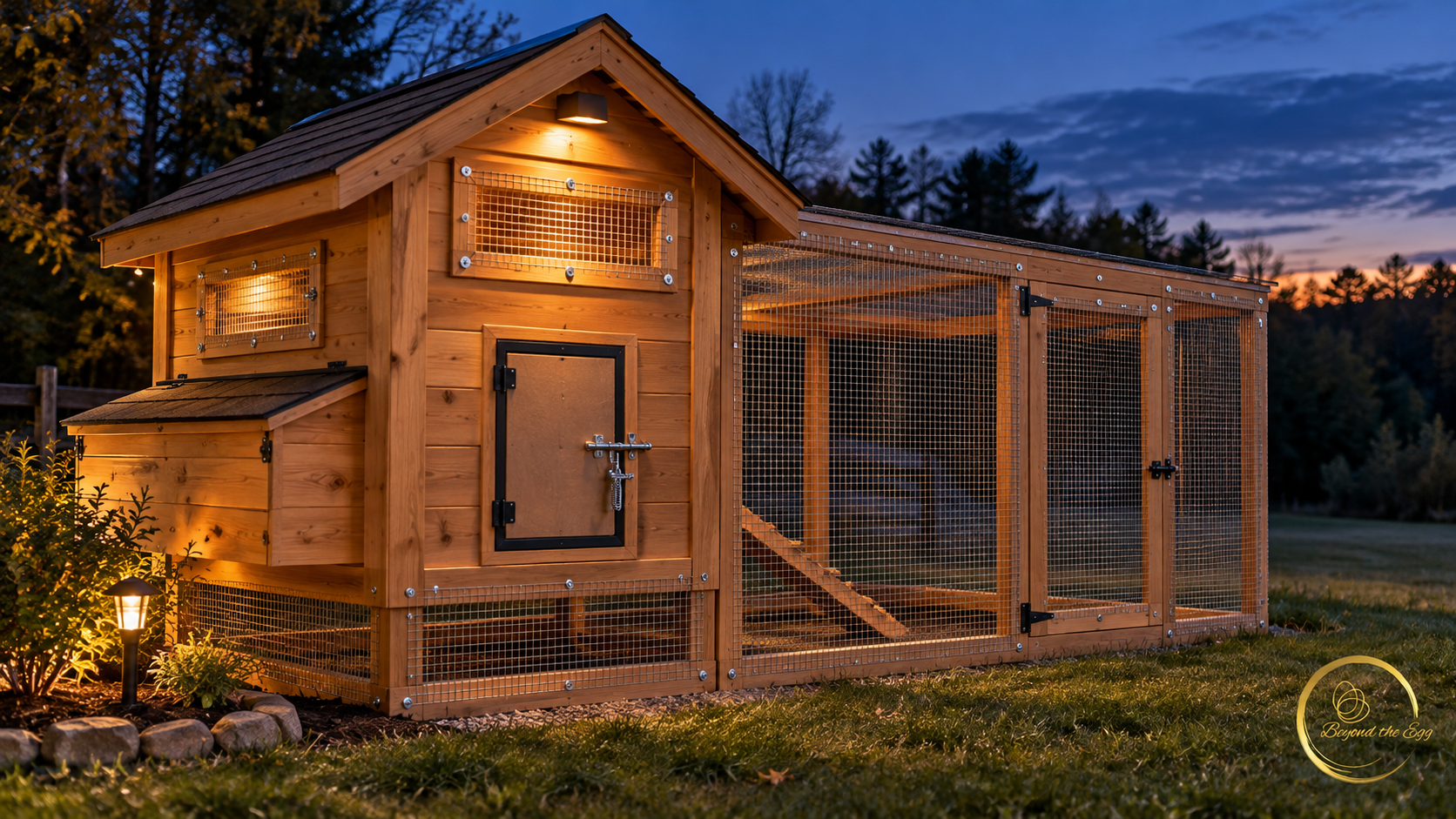
Use a latch a raccoon can't solve. A plain hook or slide bolt is an easy puzzle for a raccoon. A latch that takes two steps, like a bolt with a spring clip, works much better.
Skip the chicken wire. Funny, but true: chicken wire keeps chickens in, not predators out. Use half-inch hardware cloth on windows, vents, and runs, fastened with screws and washers.
Block the diggers. Bury hardware cloth about a foot deep around the coop, or lay a wide apron of it flat on the ground around the edges and pin it down.
Patch holes fast. Predators remember where they found dinner, and they come back.
Don't leave snacks out. Store feed in metal cans, sweep up spills before dark, and collect eggs every day.
Ready to Start Your Flock?
Once your coop is snug and secure, the fun part begins. Hatching Egg Directory lists breeders who sell hatching eggs, so you can find the right birds for your backyard.