Best Incubator for Shipped Eggs
Quick Answer
The best incubator for shipped hatching eggs is one that maintains stable temperature, turns eggs gently, provides accurate humidity monitoring, and allows enough room to manage eggs with damaged or detached air cells. For most small home hatches, the MATICOOPX 30 is a practical beginner-friendly option because it combines automatic turning, circulated air, humidity monitoring, and a built-in candler. For larger or repeated hatches, a cabinet-style incubator from Hatching Time may offer better capacity and control.
No incubator can reverse shipping damage or poor fertility, so successful hatching also depends on how the eggs are packed, received, rested, and handled.
Planning a hatch? Find reputable poultry breeders and available hatching eggs through the Hatching Egg Directory.
How We Evaluate Incubators
Our recommendations focus on the features that matter during a real hatch—not simply the number of features listed on a product page.
We consider:
Temperature stability: Whether the incubator is designed to maintain consistent, circulated heat.
Humidity management: How easy it is to monitor humidity and add water without repeatedly opening the incubator.
Egg turning: Whether turning is automatic, when it stops, and whether the standard system accommodates the intended egg position.
Shipped-egg suitability: Whether eggs can be kept upright when damaged, loose, or detached air cells require an alternative setup.
Capacity: The advertised egg capacity compared with the incubator’s size and intended use.
Ease of use: Display clarity, setup, visibility, candling features, and cleaning.
Reliability and support: Manufacturer instructions, replacement options, warranty information, availability, and owner feedback.
Value: Whether the incubator provides useful features at a reasonable cost for its intended user.
Recommendations are based on personal experience when specifically stated, manufacturer documentation, product specifications, availability, and patterns in customer feedback. We do not claim to have personally tested a product unless that is clearly disclosed.
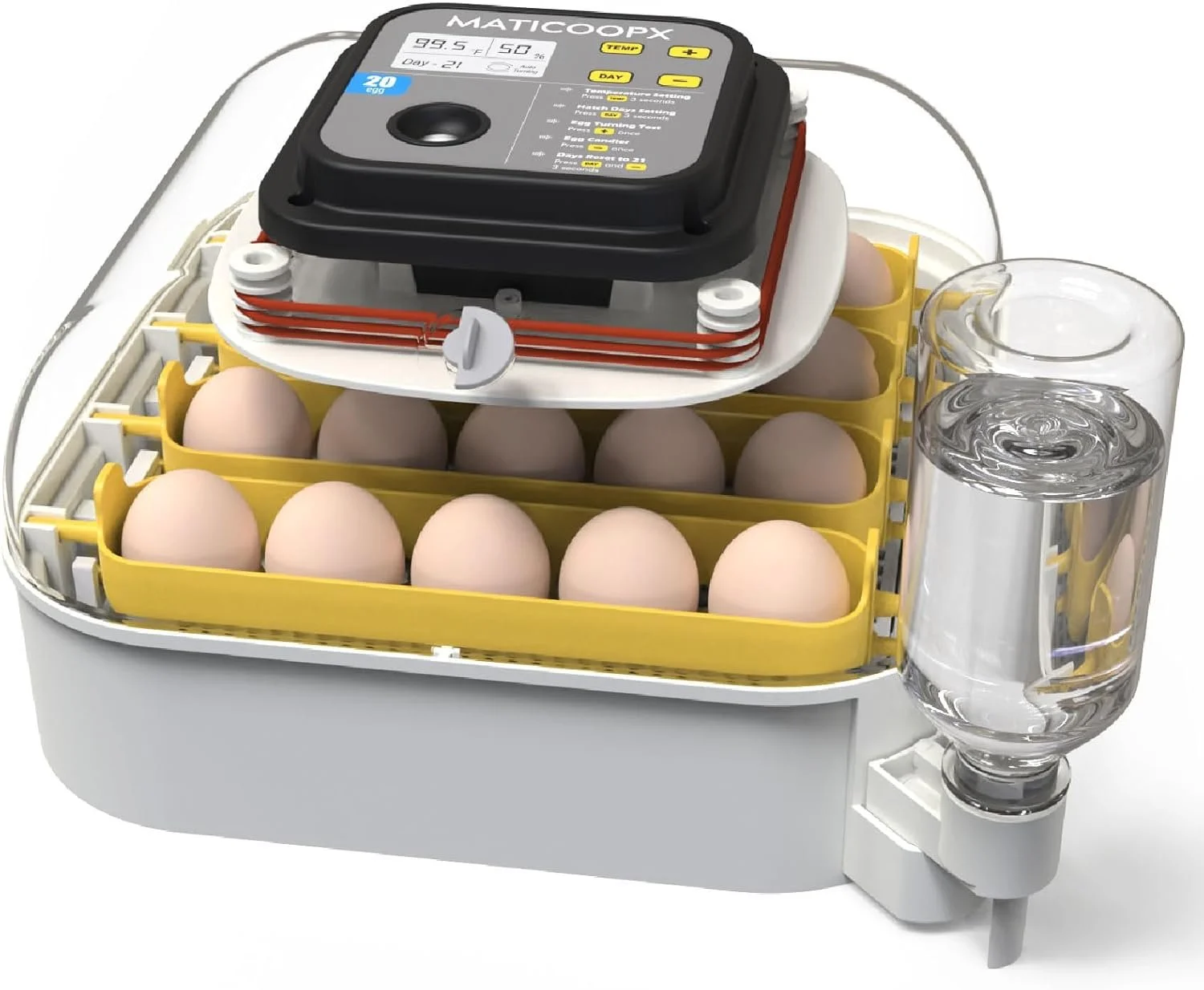
MATICOOPX 20 and 30 Review: Best Overall for Shipped Eggs
The MATICOOPX 20 and MATICOOPX 30 offer the same core features; the primary difference is egg capacity. The 20 holds up to 20 chicken-sized eggs, while the 30 holds up to 30.
Both models provide strong temperature and humidity control, stable operation, automatic turning, external water access, a built-in candler, and a clear viewing lid. Their compact size makes them practical for home hatchers without requiring a large amount of counter or storage space.
The feature that makes these models especially useful for shipped hatching eggs is their ability to hold eggs vertically. Shipped eggs with loose, damaged, or detached air cells may need to remain upright with the air-cell end elevated. The MATICOOPX design makes that setup easier than incubators that require eggs to lie horizontally.
Which Size Should You Choose?
Choose the MATICOOPX 20 if you usually incubate smaller batches, have limited space, or want the most compact option.
Choose the MATICOOPX 30 if you expect to incubate larger batches or want additional capacity without moving to a much larger cabinet-style incubator.
Pros
Stable temperature control
Effective humidity monitoring and control
Holds eggs vertically for shipped-egg incubation
Automatic egg turning
Stops turning before hatch
External water refill
Built-in egg candler
Clear viewing lid
Compact footprint
Beginner-friendly controls
Cons
The advertised capacity is based on chicken-sized eggs
Actual capacity varies with egg size and vertical spacing
The clear lid may lose heat when opened frequently
The 20 may be outgrown by people who begin hatching larger batches
Best For
The MATICOOPX 20 and 30 are best for home hatchers who regularly receive shipped eggs and want stable temperature and humidity control in a compact, easy-to-manage incubator.
My Recommendation
The MATICOOPX 30 is my best overall choice because it provides the same compact, shipped-egg-friendly design as the 20 with room for a larger hatch. The MATICOOPX 20 is the better compact choice for smaller batches.
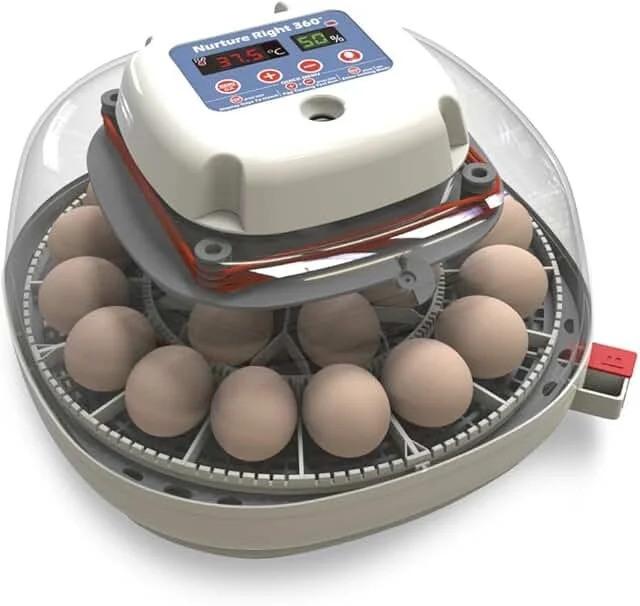
Why I Don’t Recommend the Nurture Right 360 for Shipped Eggs
The Nurture Right 360 is a familiar incubator with good hatch visibility, but I do not recommend it for shipped hatching eggs.
Its turning mechanism places eggs horizontally and rolls them across a hard-plastic surface. In my experience, this creates more vibration and movement than I want for eggs that have already experienced the stress of shipping.
Shipped eggs frequently arrive with loose, damaged, or detached air cells. Keeping the eggs upright with the air-cell end elevated can help prevent additional movement while the air cells settle and stabilize. Because the Nurture Right 360 holds eggs on their sides, it does not provide that upright positioning during automatic turning.
Concerns for Shipped Eggs
Eggs remain horizontal instead of upright
The turning mechanism rolls eggs across hard plastic
Turning can create unnecessary vibration and movement
Loose or detached air cells cannot remain stabilized at the elevated end
An alternative setup would require disabling or modifying the normal turning process
Best Use
The Nurture Right 360 may still suit locally collected eggs with intact, stable air cells, particularly for hatchers who value its clear 360-degree viewing area. However, that is not the purpose of this comparison.
My Recommendation
For shipped hatching eggs, choose the MATICOOPX 20 or MATICOOPX 30 instead. Their ability to hold eggs vertically is better aligned with the special handling that compromised air cells may require.
I do not recommend the Nurture Right 360 for shipped eggs.
How to Choose an Incubator for Shipped Hatching Eggs
Shipped eggs require more careful handling than eggs collected locally. Shipping can disturb the air cell, weaken internal structures, and reduce hatchability before the eggs ever enter an incubator. Choose an incubator based on how well it supports those special needs—not simply its advertised capacity.
Vertical Egg Positioning
The ability to keep eggs upright is one of the most important considerations for shipped eggs. Position each egg with the air-cell end elevated.
Upright positioning may help limit additional movement when an egg arrives with a loose, damaged, or detached air cell. An incubator that holds eggs horizontally may make air-cell stabilization more difficult.
Gentle Automatic Turning
Turning supports normal embryo development, but shipped eggs may require gentler handling. Look for a mechanism that turns upright eggs gradually without rolling them across a hard surface.
Depending on air-cell condition, some shipped eggs may need a delayed or modified turning schedule. Inspect and candle the eggs before choosing the turning method.
Temperature Stability
Consistent temperature matters more than a long list of extra features. Choose a forced-air incubator that circulates heat evenly and recovers efficiently after water is added or the lid is opened.
Use an independent, reliable thermometer to verify the incubator’s display before setting valuable eggs.
Humidity Control
A visible humidity reading makes the incubation environment easier to monitor. External water access is particularly helpful because it allows water to be added without repeatedly opening the incubator and disrupting temperature and humidity.
Humidity needs can vary with egg type, shell characteristics, local conditions, and air-cell development. Avoid relying on one universal number for every hatch.
Capacity
Advertised capacity is normally based on chicken-sized eggs placed in the manufacturer’s standard configuration. Actual capacity may change when eggs are positioned vertically or spaced to protect damaged air cells.
Choose a machine that provides more room than your typical batch requires rather than packing shipped eggs too tightly.
Visibility and Candling
A clear lid makes it easier to monitor the hatch without opening the incubator. A built-in candler is convenient for checking development and observing air-cell condition, although an independent candler may provide a stronger or more focused light.
Cleaning
Shipped eggs can break, leak, or introduce debris into an incubator. Look for removable components, accessible water channels, and smooth surfaces that can be cleaned thoroughly between hatches.
Always follow the manufacturer’s cleaning instructions and allow every component to dry completely before storage or reuse.
Warranty and Support
Review the warranty, replacement-parts availability, instructions, and customer-support options before purchasing. Reliable support becomes especially valuable when the incubator is being used for costly or difficult-to-replace shipped eggs.
Frequently Asked Questions About Incubators for Shipped Eggs
What is the best incubator for shipped hatching eggs?
The MATICOOPX 30 is my best overall choice for shipped eggs because it provides stable temperature and humidity control, holds eggs vertically, and offers more capacity than the MATICOOPX 20. The 20 is the better compact option for smaller hatches.
Why should shipped eggs be incubated vertically?
Shipping can loosen, damage, or detach an egg’s air cell. Keeping the egg upright with the air-cell end elevated limits additional movement and provides a better position for monitoring the air cell.
Which end of a shipped egg should face upward?
Place the larger, rounded end upward because that is where the air cell is normally located. The smaller, pointed end should face downward.
Should shipped eggs be allowed to rest before incubation?
Shipped eggs are commonly allowed to rest upright before incubation, particularly when air cells appear loose or damaged. The appropriate resting period depends on the eggs’ condition, travel time, temperature, and air-cell appearance.
Should shipped eggs be turned immediately?
Yes Eggs with unstable air cells benefit from an upright position to maintain the air cell at the top.
Can shipped eggs be placed on their sides?
Eggs with stable air cells may sometimes be incubated horizontally, but upright positioning is generally preferable when air cells are loose, damaged, or detached. Horizontal rolling can create additional movement inside a compromised egg.
Why don’t you recommend the Nurture Right 360 for shipped eggs?
The Nurture Right 360 holds eggs horizontally and rolls them across a hard-plastic surface. I do not recommend that turning method for shipped eggs because it creates movement and does not allow a damaged air cell to remain elevated and stabilized.
What is the difference between the MATICOOPX 20 and 30?
The primary difference is capacity. The MATICOOPX 20 holds up to 20 chicken-sized eggs, while the MATICOOPX 30 holds up to 30. Their principal incubation features and shipped-egg-friendly vertical positioning are otherwise similar.
Do I need a separate thermometer and hygrometer?
It is wise to verify the incubator’s readings with reliable independent instruments before setting valuable eggs. Place them appropriately and compare the readings without obstructing airflow or interfering with the turning mechanism.
Does a built-in candler replace a separate candler?
A built-in candler is convenient for quick checks, but a separate high-quality candler may provide a stronger or more focused view. Dark or heavily pigmented shells can be especially difficult to see through.
Can a good incubator guarantee that shipped eggs will hatch?
No. An incubator cannot reverse shipping damage, infertility, improper storage, extreme temperatures, or poor egg quality. It can only provide the best possible environment for the viable embryos that arrive.
Where can I find hatching eggs from reputable breeders?
Use the Hatching Egg Directory to browse poultry breeders, compare available breeds, and find sellers offering local pickup or shipped hatching eggs.
Do You Sell Hatching Eggs or Breeding Stock?
Reach poultry keepers who are actively looking for breeders, breeds, and available hatching eggs.