How Do You Keep Chicken Coop Bedding Dry? 7 Easy Fixes
Edited by Jennifer Bryant · Poultry breeder, Animal Science graduate, and Poultry Nerds Podcast co-host.
The secret to dry bedding is good airflow, a smart spot for the waterer, and a thick layer of absorbent bedding. Most wet coops come down to one of those three things.
Dry bedding matters more than you might think. Wet bedding contributes to odors and poor air quality. In winter, excess moisture combined with cold temperatures also raises the risk of frostbite.
1. Let the Air Flow
Chickens breathe out a lot of moisture, especially at night. Vents up high near the roof let that damp air escape. Keep the airflow above the roost so sleeping birds don't sit in a draft.
2. Move the Waterer
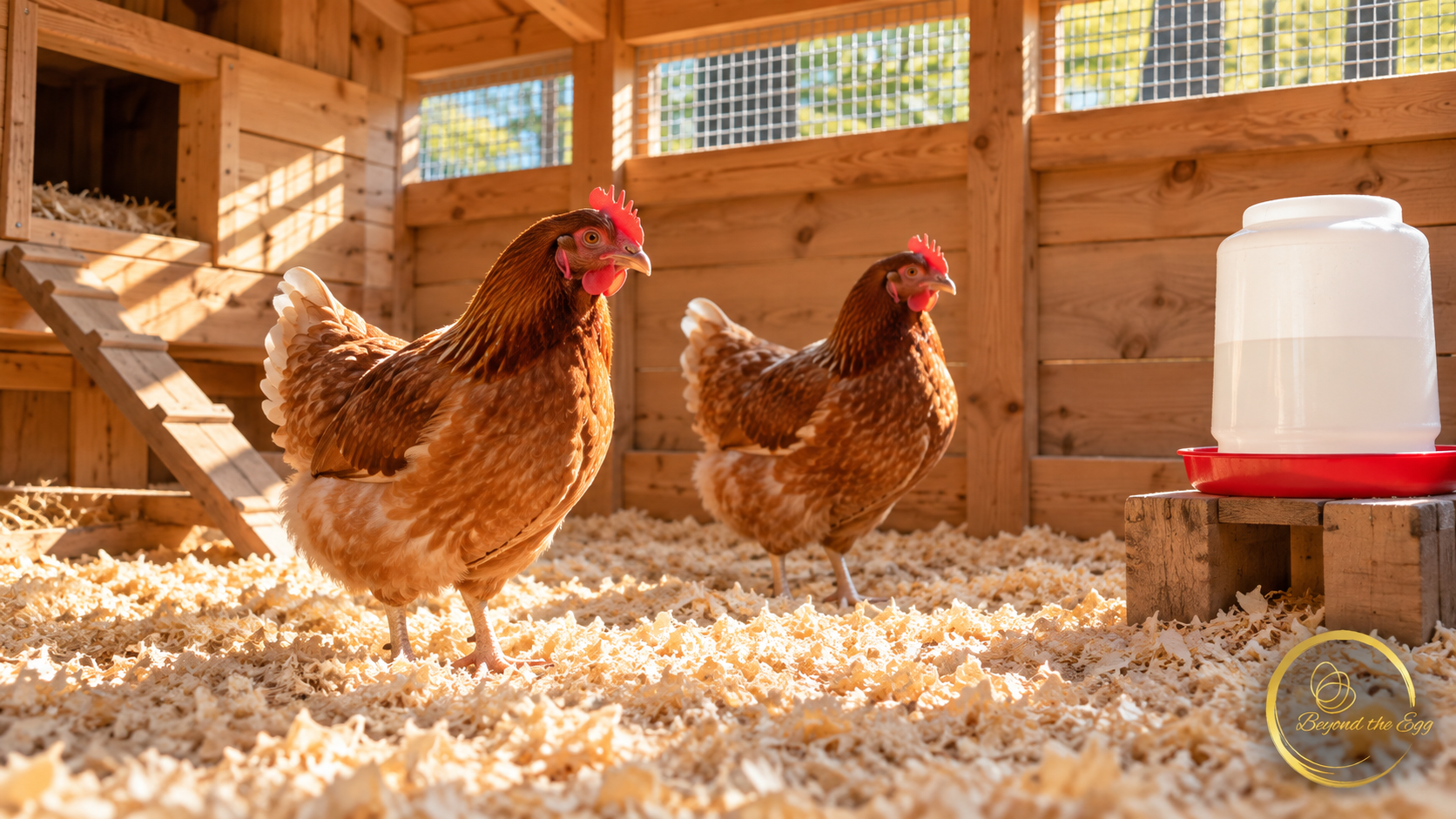
Leaky or splashing waterers are a common cause of soggy spots. Hang the waterer securely or set it on a stable block so splashes don't soak the bedding. If you move it into the run, make sure your birds can still reach clean, unfrozen water whenever they need it.
3. Pick Absorbent Bedding
Pine shavings are a popular choice because they soak up moisture and stay fluffy. Some keepers use sand. Straw can work too, but it tends to mat down when wet.
4. Go Thick
A deep layer of bedding, about 4 to 6 inches, soaks up more moisture and stays drier on top. It also adds a little warmth in winter.
5. Fix Leaks
Check for roof leaks, gaps around doors, and rain blowing in through windows. A little caulk or flashing can save a lot of bedding.
6. Keep the Floor High and Dry
If your coop sits in a low spot, rainwater can seep in. Raise the coop or improve drainage around it, so water flows away.
7. Spot-Clean Often
Scoop out wet or caked bedding under roosts and around waterers. Toss in fresh bedding and stir it with a rake to help everything dry.
The Smell Test
Walk into your coop and take a sniff. If you smell a strong ammonia odor, the bedding is too wet or too dirty. Increase ventilation, remove manure and wet or soiled bedding, and replace it with fresh bedding right away. Your chickens' lungs will thank you.
Building or upgrading a coop for new birds? Find breeders at Hatching Egg Directory.