Why Do Chickens Follow You Everywhere? (Spoiler: It's Probably the Snacks)
Edited by Jennifer Bryant · Poultry breeder, Animal Science graduate, and Poultry Nerds Podcast co-host.
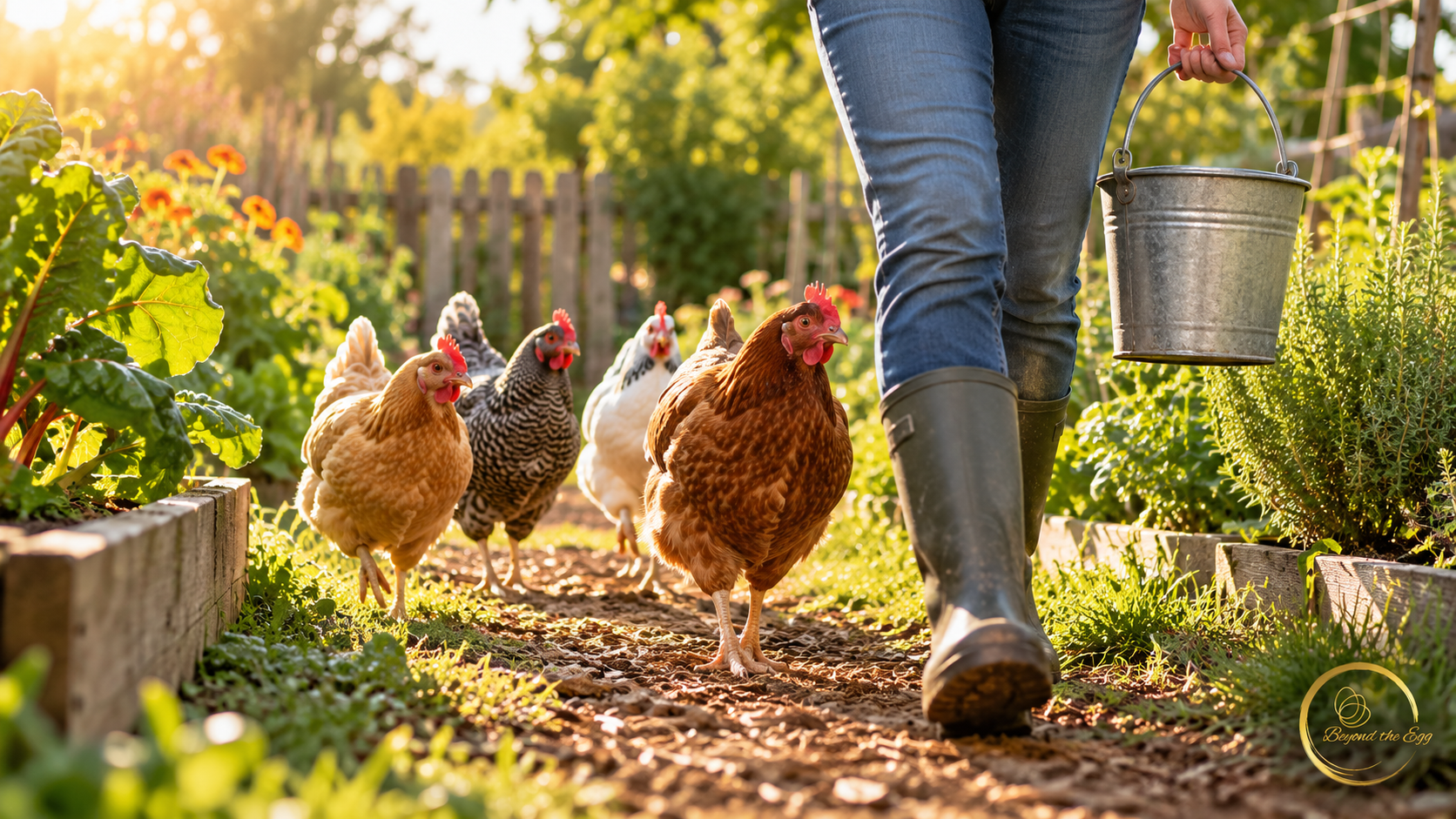
Chickens follow you because you're interesting, you might have food, and they like company. To a chicken, a person carrying a bucket is the most exciting thing in the backyard.
If you've ever turned around in the garden and found three hens right on your heels, you know the feeling. You have a fan club.
Reason 1: You Mean Food
Chickens learn fast. If you bring scratch, scraps, or treats, they quickly connect you with good things to eat. Soon, the sight of you (or the sound of the back door) sends them running.
That's not just greed. It's smart chicken thinking.
Jennifer Bryant of Bryant's Roost knows this one well: "I have a chicken who jumps into the Gator every time I park it looking for food. It's funny and aggravating at the same time."
Reason 2: You Dig Up Bugs
When you pull weeds or turn over soil, you uncover worms, grubs, and beetles. Chickens figure out that wherever you dig, dinner appears. Gardeners often end up with a feathered helper or two.
Reason 3: They're Flock Animals
Chickens feel safest in a group. Hens raised with gentle handling often treat their people as part of the gang. Staying close to a big, calm buddy just feels safe.
Reason 4: Curiosity
Chickens are nosy. A new tool, a dropped glove, a shiny shoelace: they want to inspect it all. If you're doing something, they want to know what it is.
Is It a Good Sign?
Usually, yes! A chicken that follows you may be comfortable around people, but watch her overall behavior. That familiarity can make daily care, health checks, and catching birds much easier.
A Few Gentle Tips
Watch your step. Chickens have a talent for being right where your foot lands.
Keep treats small, so they still eat their regular feed.
Close the garden gate, unless you want help harvesting the tomatoes.
Roosters are different. A rooster who follows closely, puffs up, or charges may be showing territorial or aggressive behavior, not affection. Give him space, keep children away, and don't assume every approach is friendly.
Want a friendly flock of your own? Find breeders at Hatching Egg Directory.