Why Do Chickens Molt? A Beginner's Guide to the Yearly Makeover
Edited by Jennifer Bryant · Poultry breeder, Animal Science graduate, and Poultry Nerds Podcast co-host.
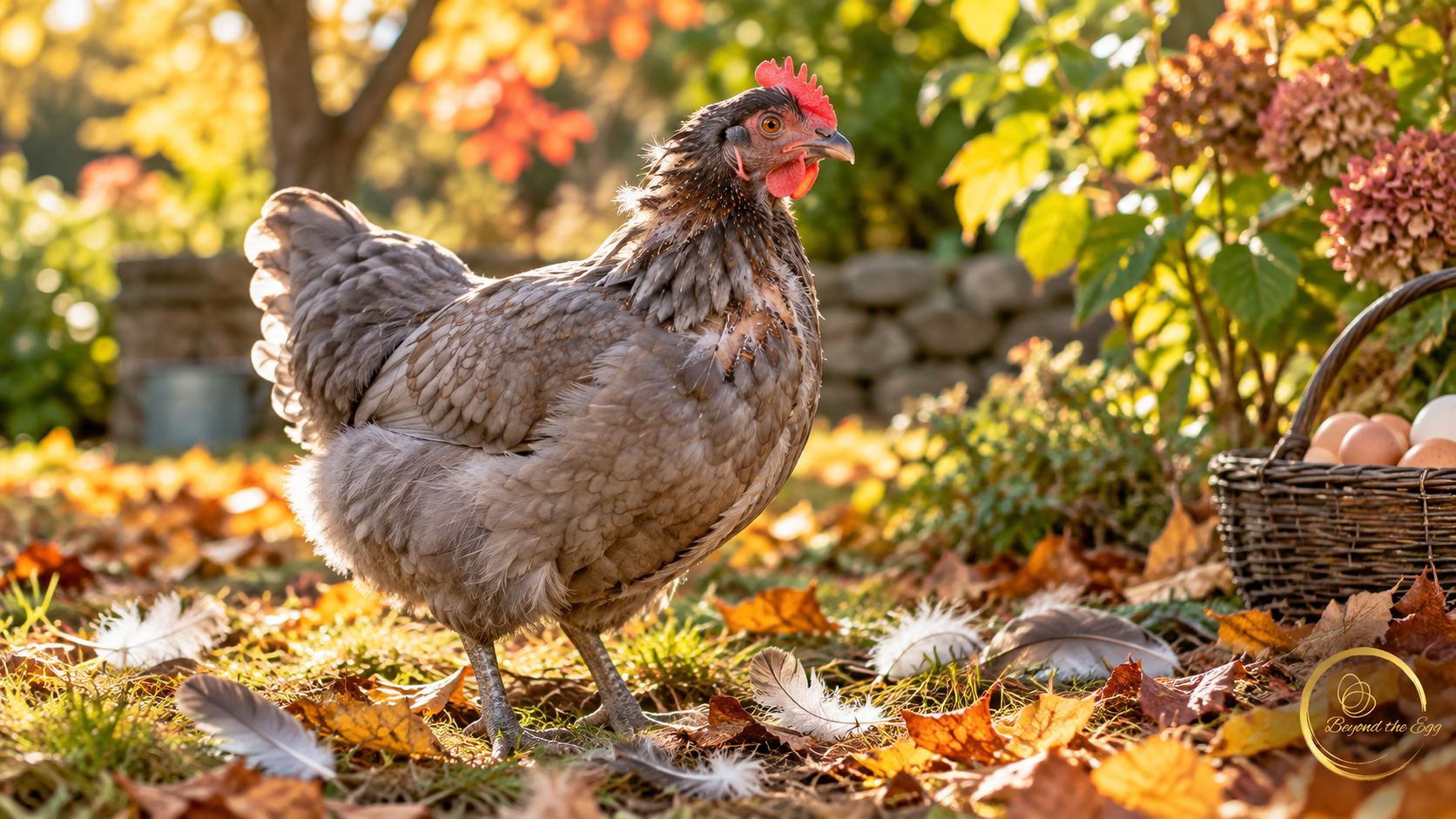
Chickens molt to swap out old, worn feathers for a fresh new set. It usually happens once a year, most often in fall as the days get shorter. It's normal, healthy, and temporary, even if your flock looks like it lost a pillow fight.
Think of it as a yearly wardrobe change. Out with the tattered, in with the new.
Why Feathers Need Replacing
Feathers don't last forever. A year of scratching, dust bathing, and sunshine wears them out. Fresh feathers keep chickens warm and dry for the winter ahead.
What Molting Looks Like
You might notice:
Feathers all over the coop and run
Bald or patchy spots, often starting at the head and neck
Spiky new "pin feathers" poking out, like little quills
A slightly grumpy hen who doesn't want to be held
Pin feathers are tender because they have a blood supply while they grow. Handle molting hens gently.
Why Do Eggs Stop?
Feathers are made mostly of protein. Growing a whole new outfit takes a lot of it, so most hens slow down or stop laying until they're done. Eggs usually return once the new feathers are in.
How Long Does It Last?
A molt can take one to two months. Some hens zip through it quickly. Others, especially older hens, can take longer.
How to Help Your Flock
Keep feeding a balanced, complete poultry feed suited to your flock. Growing feathers takes protein.
Go easy on treats so they eat their regular feed.
Keep stress low. This isn't a good time to add new birds or move the coop.
Handle gently around those tender pin feathers.
When It's Not Molting
Missing feathers can have other causes too, like pecking, mites, or rough roosters. If feathers look broken, skin looks red or sore, or a hen seems sick, call a vet who works with poultry.
Want hardy hens for your flock? Find breeders at Hatching Egg Directory.